Packs, not ice: how reusable phase-change (PCM) cold packs work
Phase-change material packs hold a box cold for days, with no meltwater, and can be recharged many times.
Block ice works because it absorbs heat as it melts. A phase-change material (PCM) pack does the same thing, but its material is chosen to melt and freeze at a set temperature. While it changes phase, it absorbs heat and keeps the box close to that temperature.
Why packs instead of ice
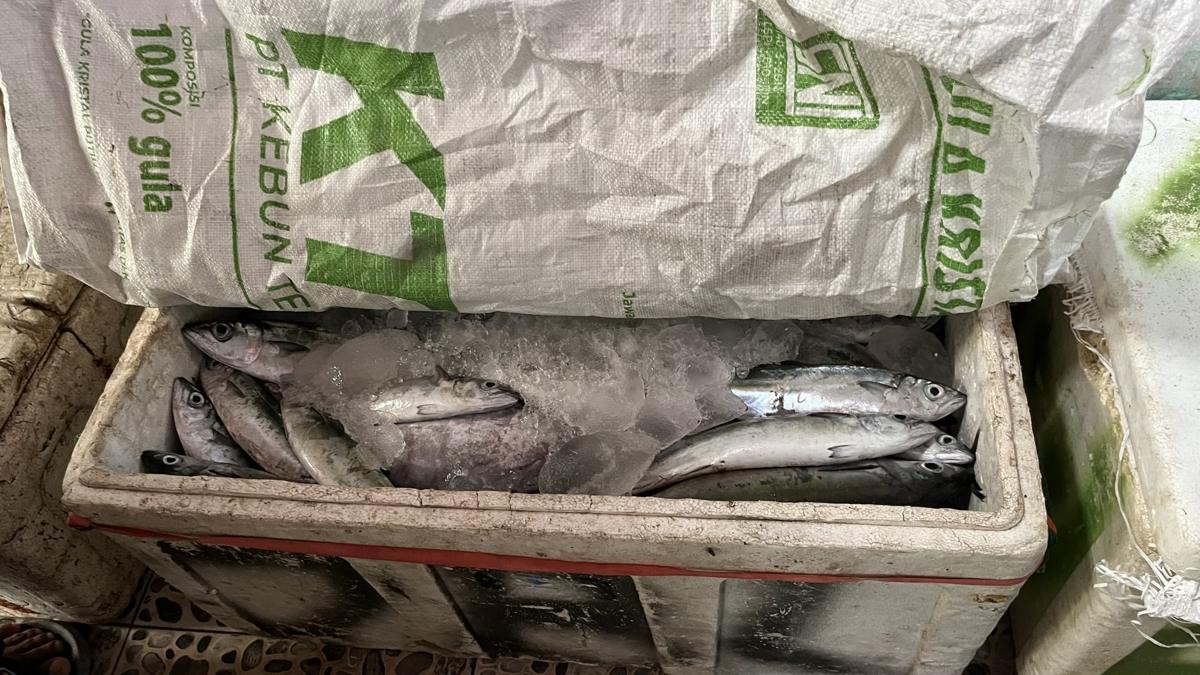
Ice melts within hours in tropical heat and leaves meltwater in the box, which can carry contaminants onto the fish. PCM packs are sealed, so there is no meltwater, and they hold their temperature longer. They also fit into the small insulated boxes that suit Langkai’s canoes, where solar cooling equipment is hard to fit.
Testing in tropical conditions
In tests by our Japanese partner, the packs kept a cooler box below 0 °C for four days. Japan is not Langkai, so ITB’s Faculty of Mechanical and Aerospace Engineering is now testing the packs under Indonesian conditions and on trial trips with Langkai boats, with temperature loggers in every box.
The trials will confirm how many packs each box needs for typical trip lengths and catch volumes. Block ice remains a fallback in the first trials, so no catch is put at risk.
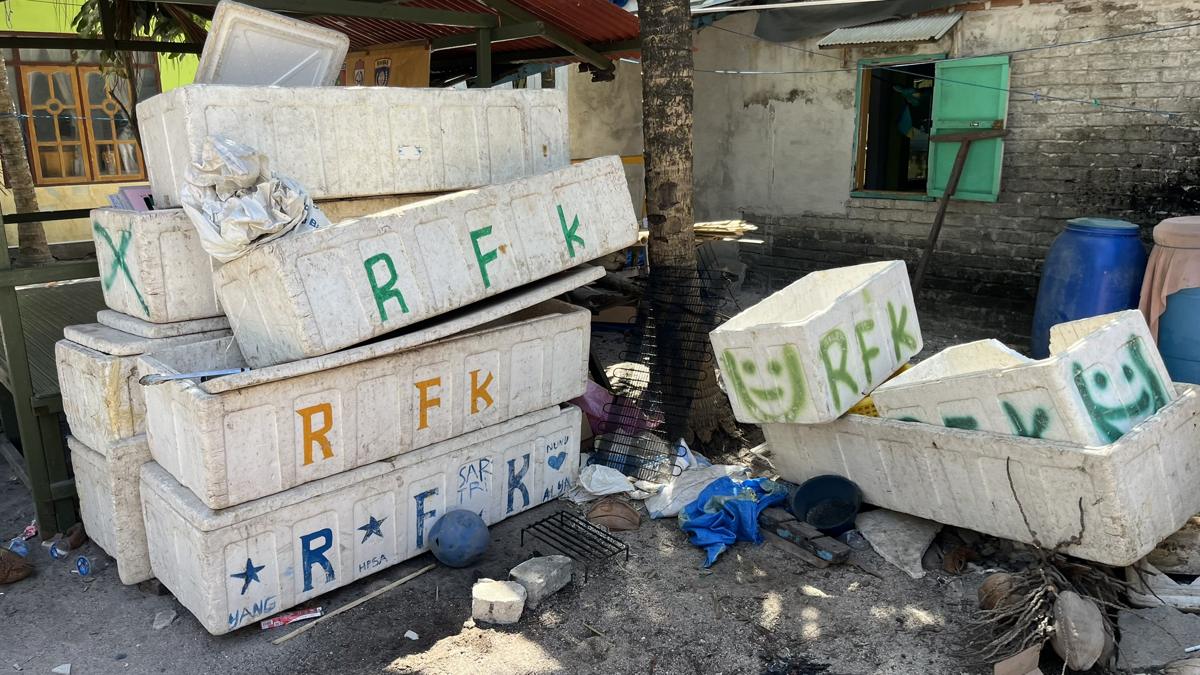 Insulated boxes at the landing. Packs replace the ice and keep the box dry.
One box from boat to buyer
The same insulated box and packs stay with the fish from the boat, through the boat run to Makassar and on by road, to the buyer. Packs never need to be swapped. After delivery they go back to a hub to be recharged.
The packs are currently imported. Our partner has agreed to manufacture them locally once demand grows, which will lower their price.